Study the Word

Bible Studies and Sermon Series

These studies explore relationships, spiritual growth, disappointment, identity, purpose, healing, and the ways God uses people to shape our lives. Each resource brings Scripture, reflection, and practical application together for individuals, churches, and small groups.

Series One

The People We Need

The People We Need explores the relationships God uses to sustain, challenge, strengthen, redirect, and restore us. Each message examines a biblical relationship and asks not only what kind of people we need in our lives, but what kind of person God is calling us to become for others.

Biblical foundation

John 11; Esther 4; 2 Samuel 12; Ruth 1; 1 Samuel 18, 20, and 23; 2 Kings 5; Exodus 18

Key themes

Presence, courage, truth, commitment, loyalty, healing, wise counsel, and shared responsibility

Lazarus, Mary, Martha, and the Bethany community

If You Had Been Here

Scripture: John 11:1–44

Bethany was more than a village. It was a circle of friendship. This study explores the people who notice our pain, remain with us through delay and grief, and help unwrap what Jesus raises to new life.

Key themes
  • Notice when something is wrong
  • Trust God’s timing
  • Help others walk free
View Study Overview
Opportunity

Be close enough to be called. Know people’s struggles, not only their strengths, and carry grief together.

Obstacle

Love enough to wait on God. Hold space for grief and worship while wondering.

Option

Move from if to now. Believe before seeing, obey before understanding, and move the stone.
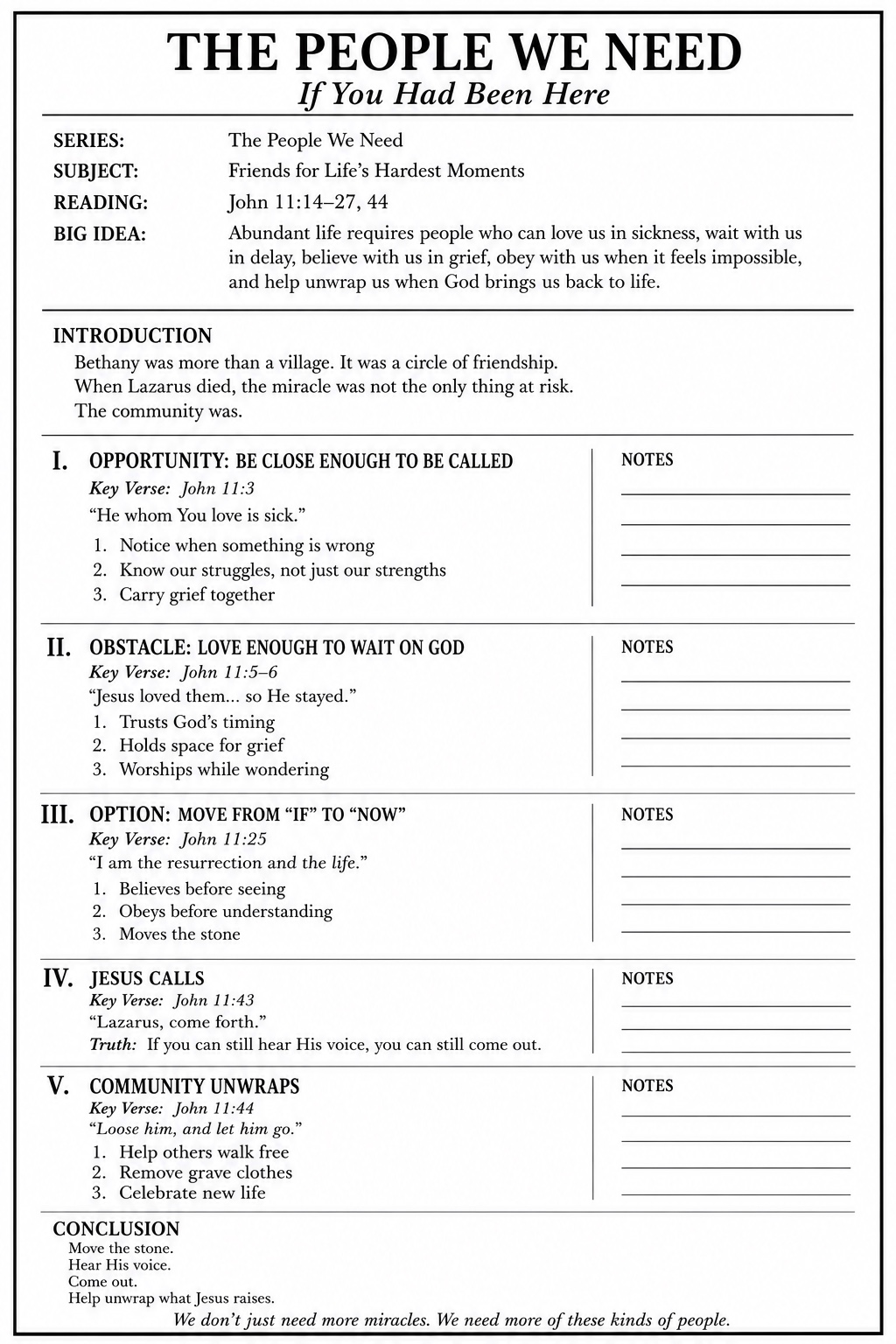
If You Had Been Here sermon teaching handout
Esther and Mordecai

For Such a Time as This

Scripture: Esther 4:1–17

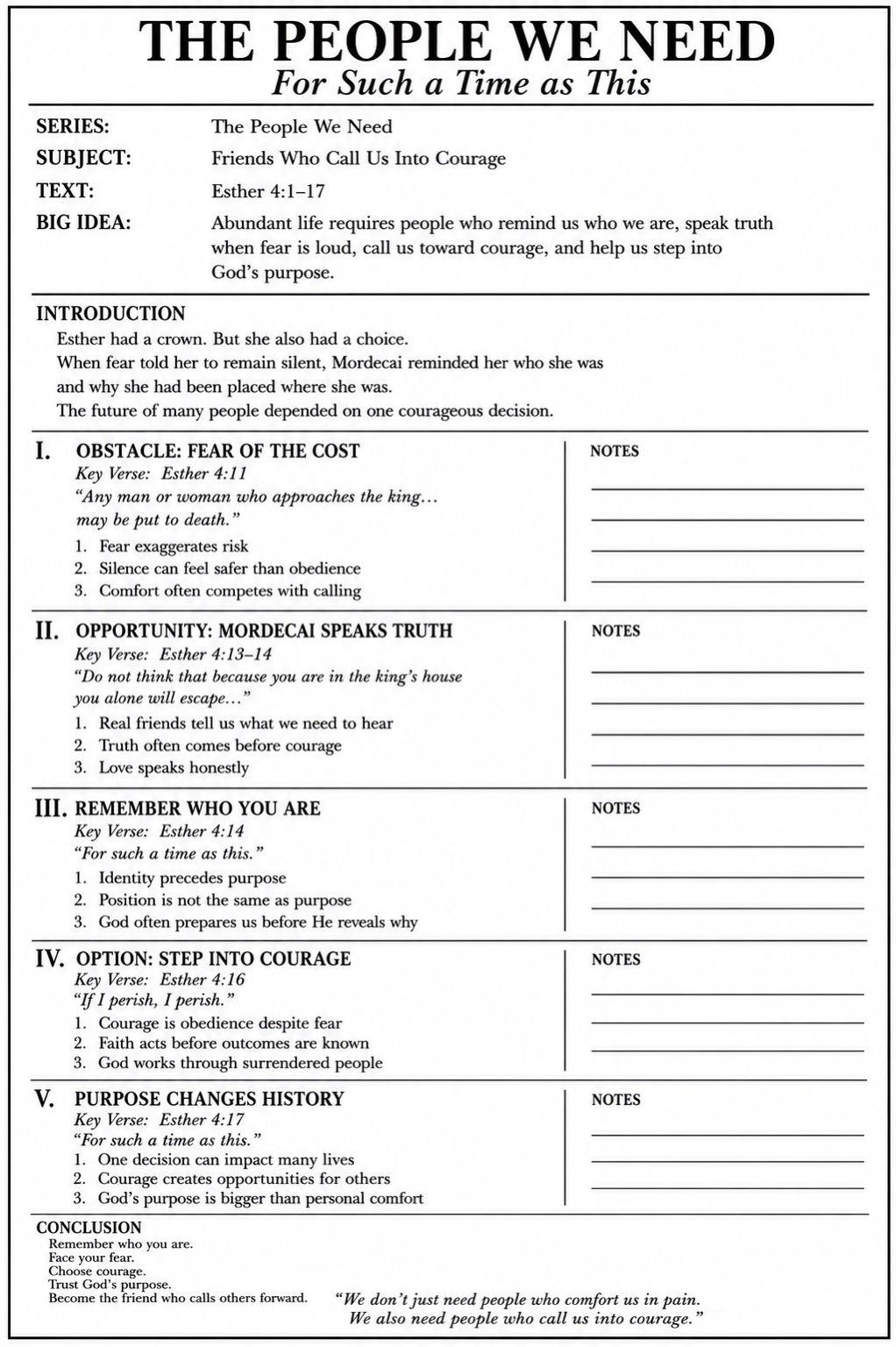
Esther had a crown, but she also had a choice. Mordecai reminded her who she was, spoke truth when fear was loud, and called her toward courage and God’s purpose.

Key themes
  • Remember who you are
  • Choose courage despite fear
  • Trust God’s larger purpose
View Study Overview
Obstacle

Fear exaggerates risk. Silence can feel safer than obedience, and comfort can compete with calling.

Opportunity

Mordecai speaks truth. Real friends tell us what we need to hear, and love speaks honestly.

Option

Step into courage. Faith acts before outcomes are known, and God works through surrendered people.

For Such a Time as This sermon teaching handout
Nathan and David

It Is You

Scripture: 2 Samuel 12:1–13

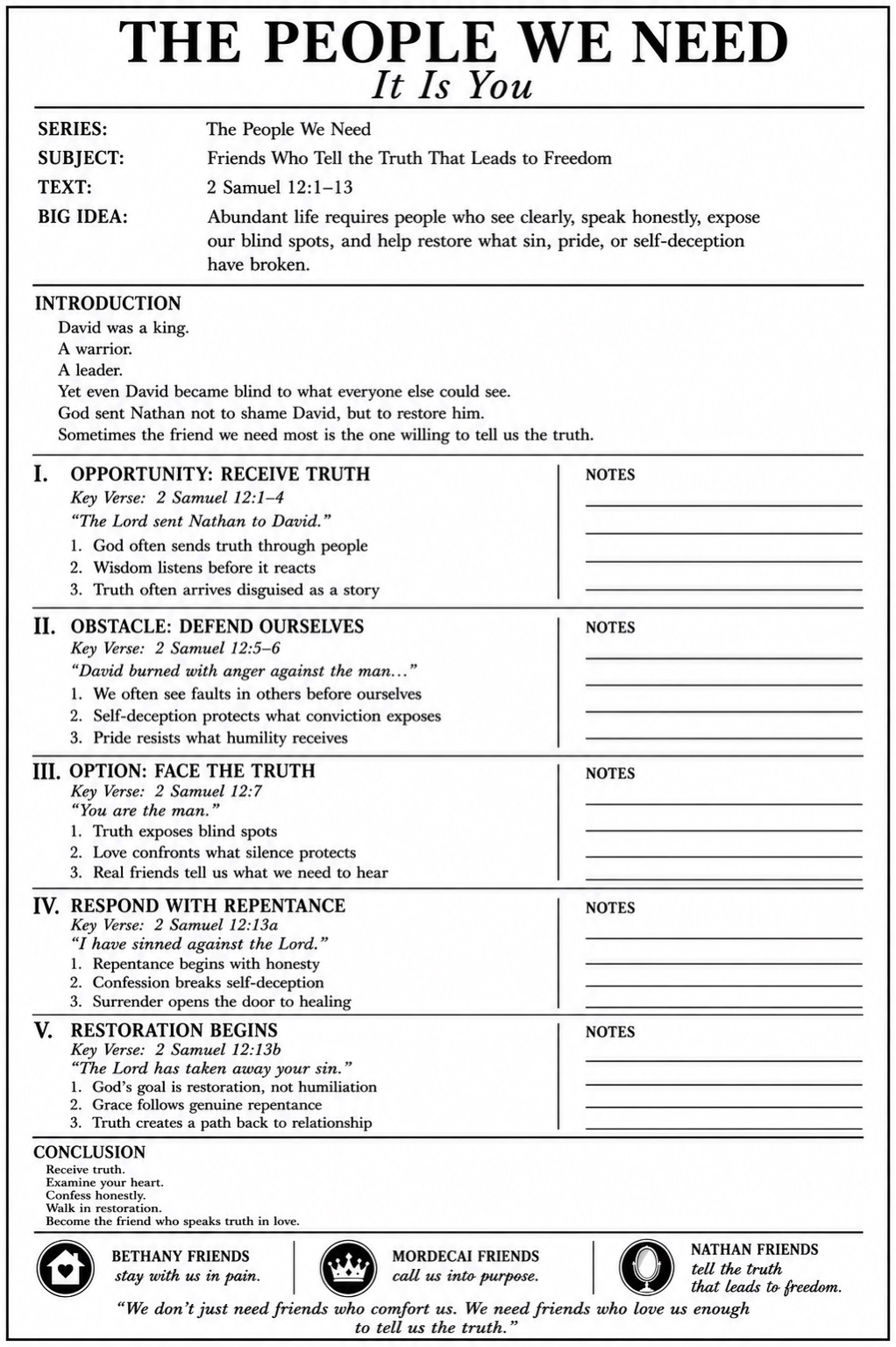
David could see another person’s wrong while remaining blind to his own. God sent Nathan to speak truth, not to humiliate David, but to lead him toward repentance, freedom, and restoration.

Key themes
  • Receive truth with humility
  • Face blind spots honestly
  • Walk in restoration
View Study Overview
Opportunity

Receive truth. God often sends truth through people, and wisdom listens before it reacts.

Obstacle

Self-deception protects what conviction exposes. Pride resists what humility receives.

Option

Face the truth and respond with repentance. Confession breaks self-deception and opens the door to healing.

It Is You sermon teaching handout
Ruth and Naomi

Where You Go, I Will Go

Scripture: Ruth 1:1–18

Naomi’s losses gave everyone a reason to leave, but Ruth stayed. This study considers the friends who choose loyalty over convenience and remain committed through uncertainty.

Key themes
  • Choose commitment
  • Stay through difficult seasons
  • Trust God with the future
View Study Overview
Opportunity

Choose commitment before circumstances improve. Relationships require intentional choice.

Obstacle

Grief can make the future look hopeless. Loss tests the depth of relationships.

Option

Walk together anyway. Loyalty chooses people over convenience, and love continues through difficult seasons.

Where You Go, I Will Go sermon teaching handout
Jonathan and David

Better Together

Scripture: 1 Samuel 18:1–4; 20:1–42; 23:16

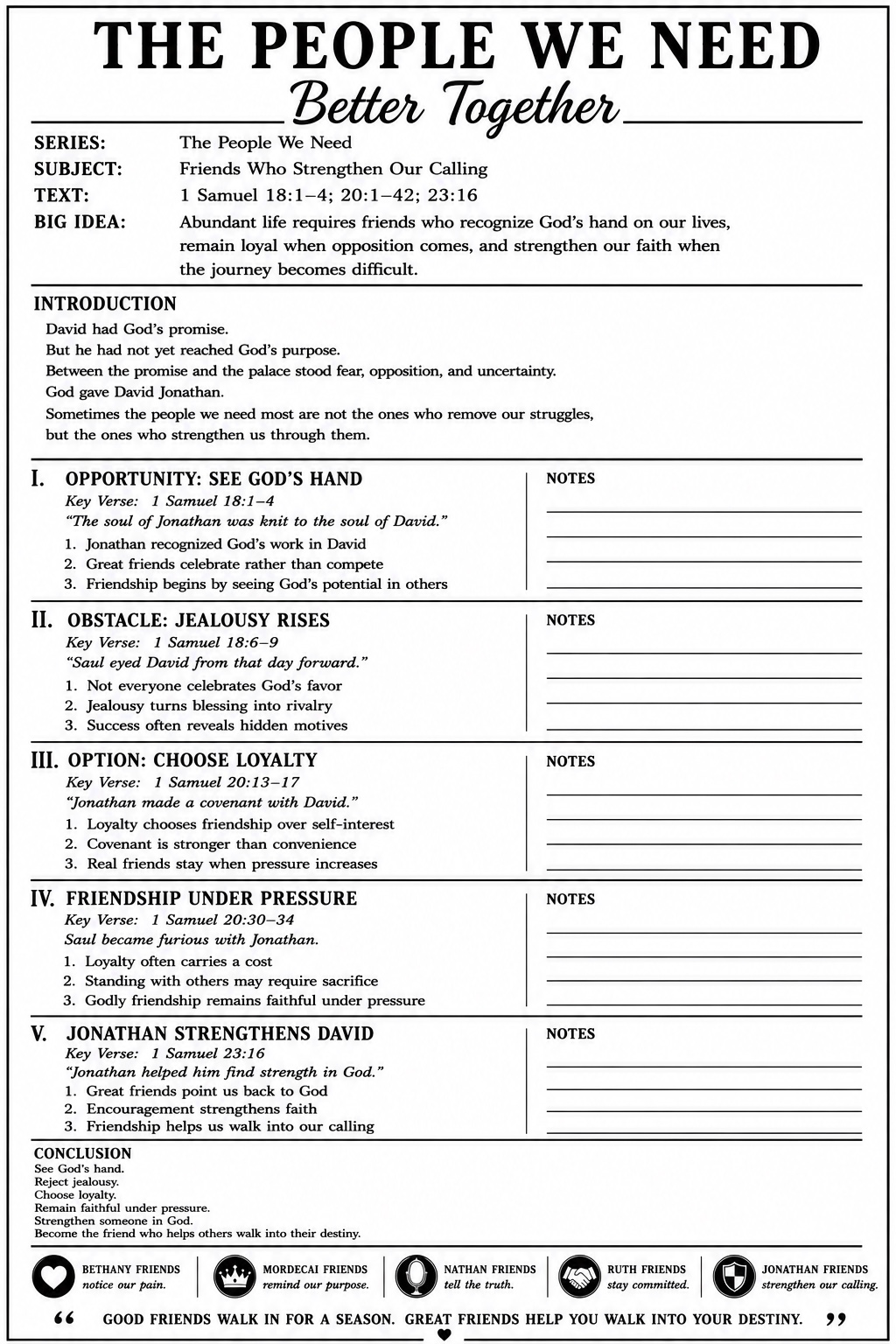
David had God’s promise, but opposition stood between the promise and the palace. Jonathan recognized God’s hand on David, stayed loyal under pressure, and helped him find strength in God.

Key themes
  • See God’s hand on others
  • Choose loyalty under pressure
  • Strengthen another person’s calling
View Study Overview
Opportunity

See God’s hand. Great friends celebrate rather than compete and recognize God’s potential in others.

Obstacle

Jealousy can turn blessing into rivalry. Pressure reveals hidden motives and tests loyalty.

Option

Choose covenant over convenience. Point others back to God and help them walk into their calling.

Better Together sermon teaching handout
The servant girl and Naaman

If Only He Knew

Scripture: 2 Kings 5:1–14

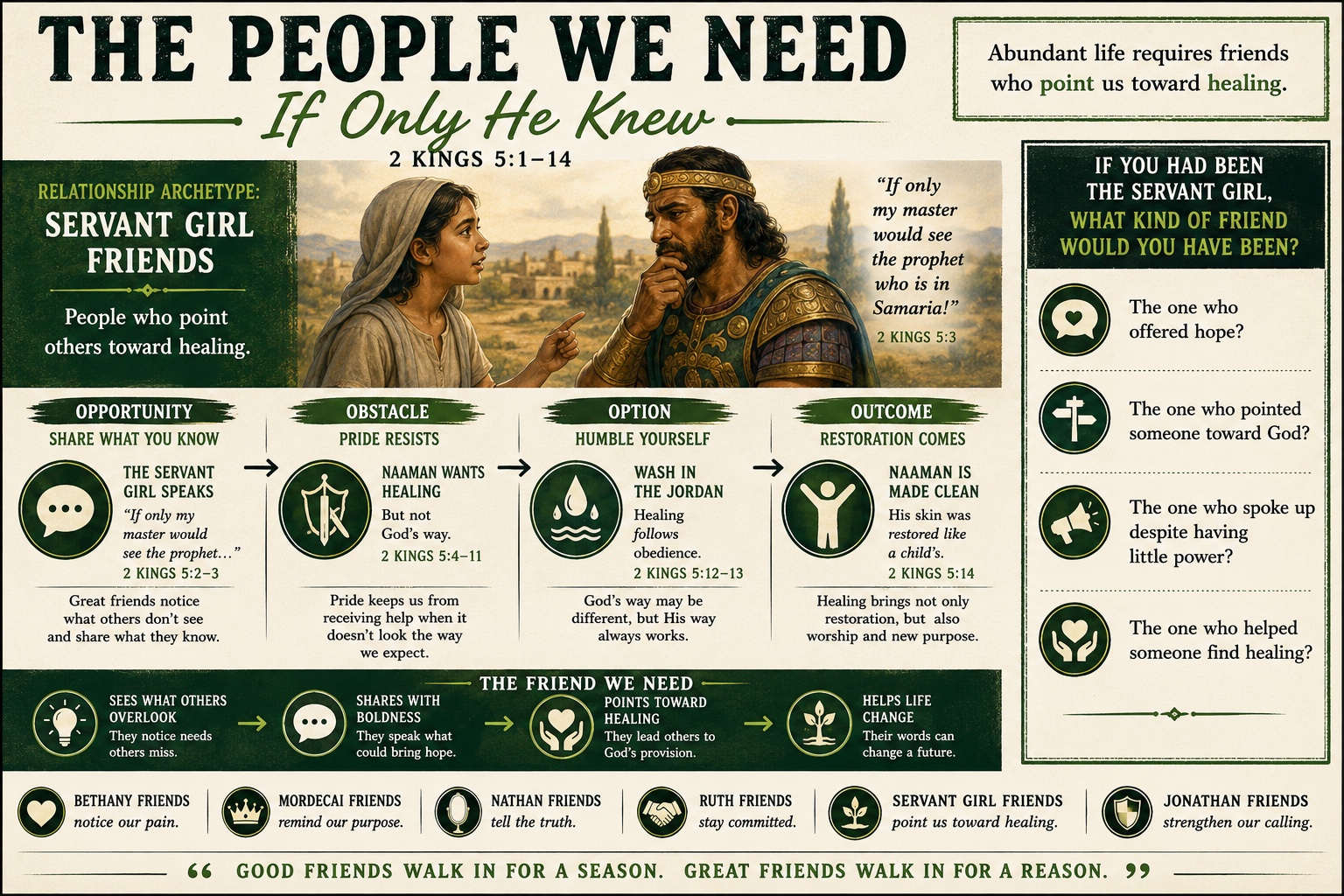
A servant girl saw what others overlooked and spoke with boldness despite having little power. Her words pointed Naaman toward God’s provision, healing, restored worship, and new purpose.

Key themes
  • See what others overlook
  • Speak hope with boldness
  • Point people toward healing
View Study Overview
Opportunity

Share what you know. Great friends notice needs others miss and speak what could bring hope.

Obstacle

Pride resists help when it does not look the way we expect.

Option

Humble yourself and follow God’s way. Healing can restore worship and open new purpose.

If Only He Knew visual teaching graphic
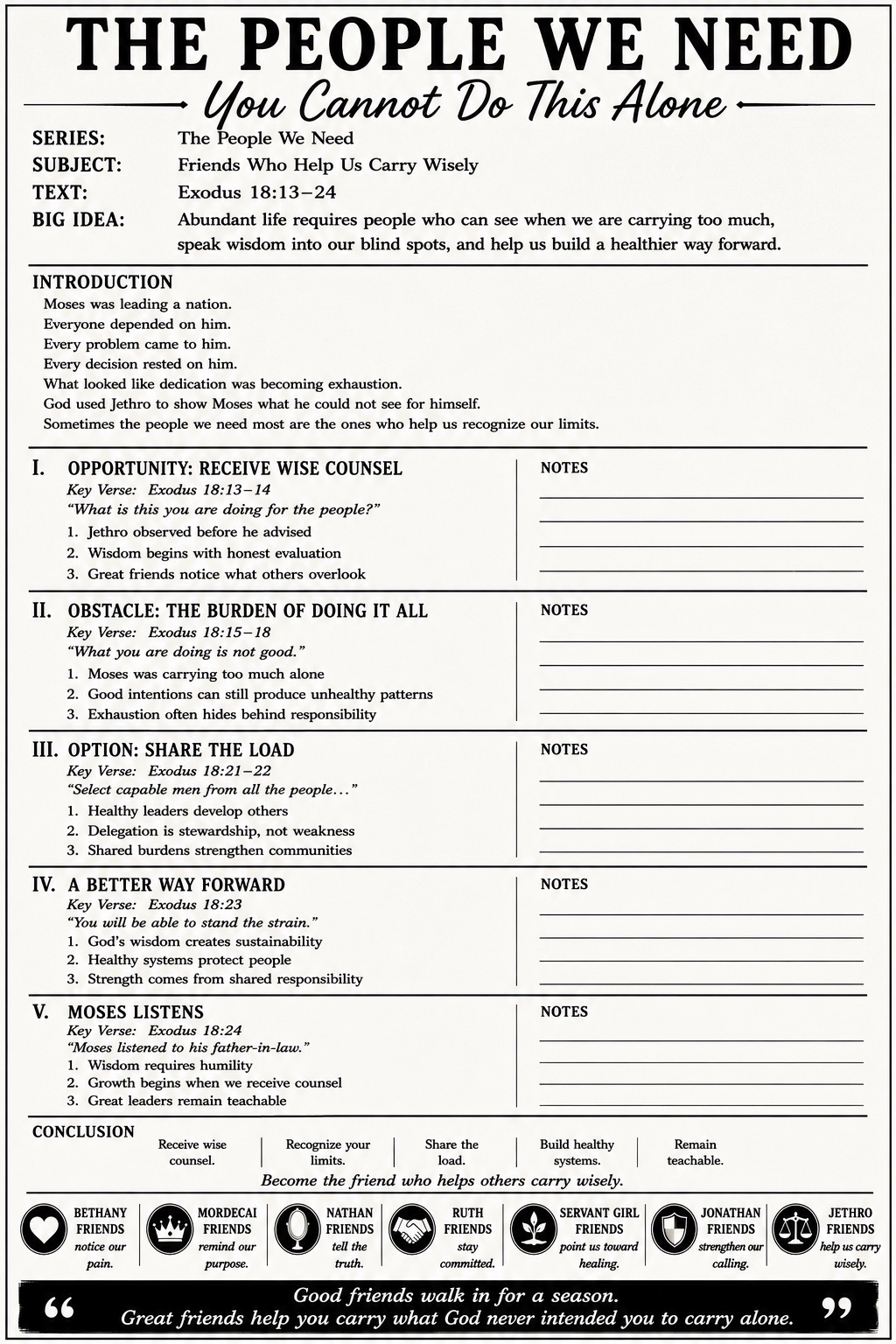
Jethro and Moses

You Cannot Do This Alone

Scripture: Exodus 18:13–24

What looked like dedication in Moses was becoming exhaustion. Jethro observed the burden, offered wise counsel, and helped Moses build a healthier and more sustainable way forward.

Key themes
  • Recognize your limits
  • Share the load
  • Remain teachable
View Study Overview
Opportunity

Receive wise counsel. Jethro observed before he advised, and wisdom began with honest evaluation.

Obstacle

Good intentions can still produce unhealthy patterns. Exhaustion often hides behind responsibility.

Option

Share the load. Delegation is stewardship, shared burdens strengthen communities, and healthy systems protect people.

You Cannot Do This Alone sermon teaching handout
Existing Series

Disappointment and the Divine

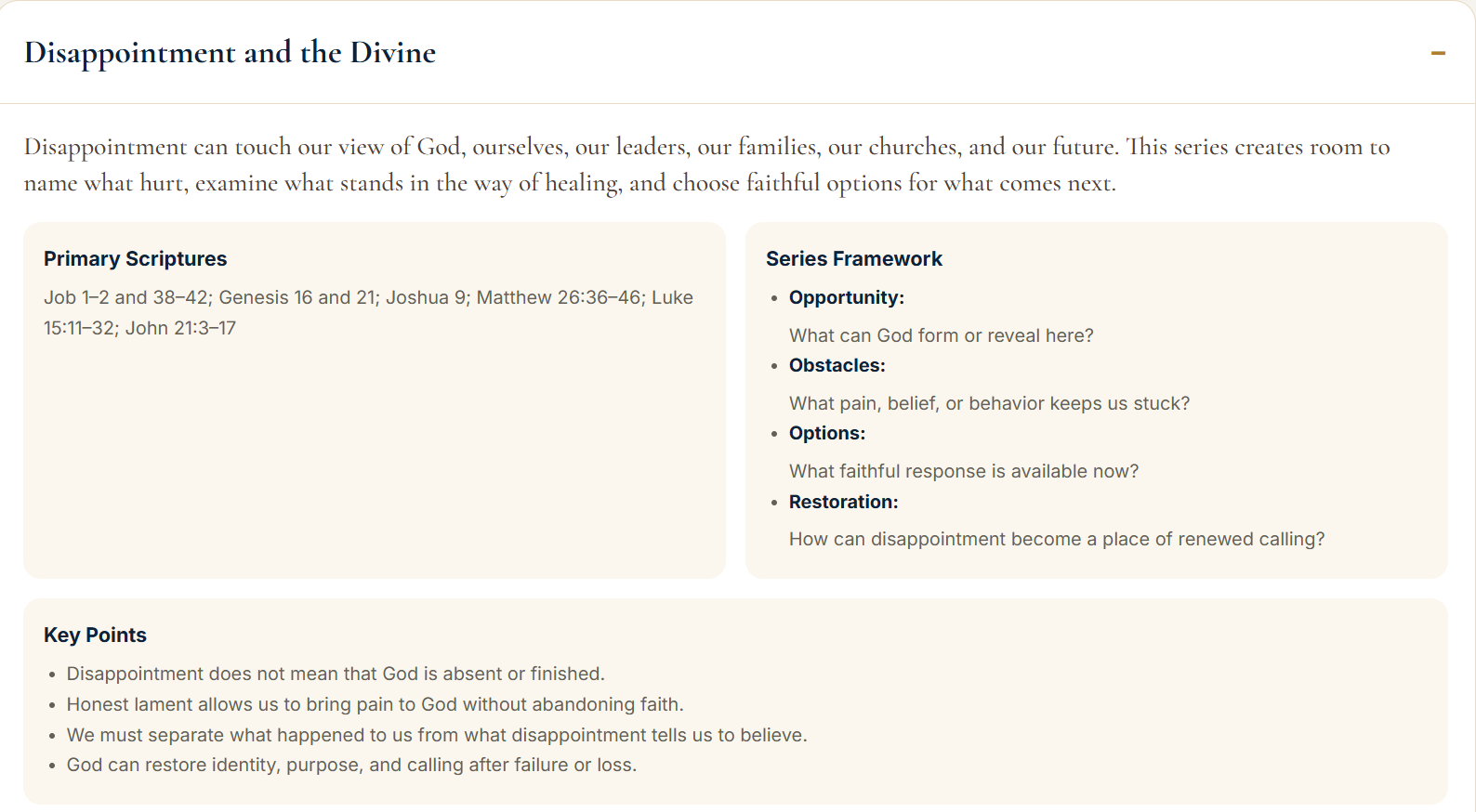
Disappointment can touch our view of God, ourselves, our leaders, our families, our churches, and our future. This series creates room to name what hurt, examine what stands in the way of healing, and choose faithful options for what comes next.

Primary Scriptures

Job 1–2 and 38–42; Genesis 16 and 21; Joshua 9; Matthew 26:36–46; Luke 15:11–32; John 21:3–17

Key themes

Honest lament, healing, faithful response, restored identity, renewed purpose, and calling after loss

Faith · Loss · Restoration

Disappointment and the Divine

Biblical foundation: Job, Genesis, Joshua, Matthew, Luke, and John

The series makes room for pain without treating disappointment as evidence that God is absent or finished. It asks what God can form or reveal, what keeps us stuck, and what faithful response is available now.

Key themes
  • Bring pain to God without abandoning faith
  • Separate what happened from what disappointment tells us to believe
  • Receive restored identity, purpose, and calling
View Study Overview
Opportunity

What can God form or reveal here?

Obstacles

What pain, belief, or behavior keeps us stuck?

Options and Restoration

What faithful response is available now, and how can disappointment become a place of renewed calling?

Disappointment and the Divine series overview
Two Related Series

Formation and discernment belong together.

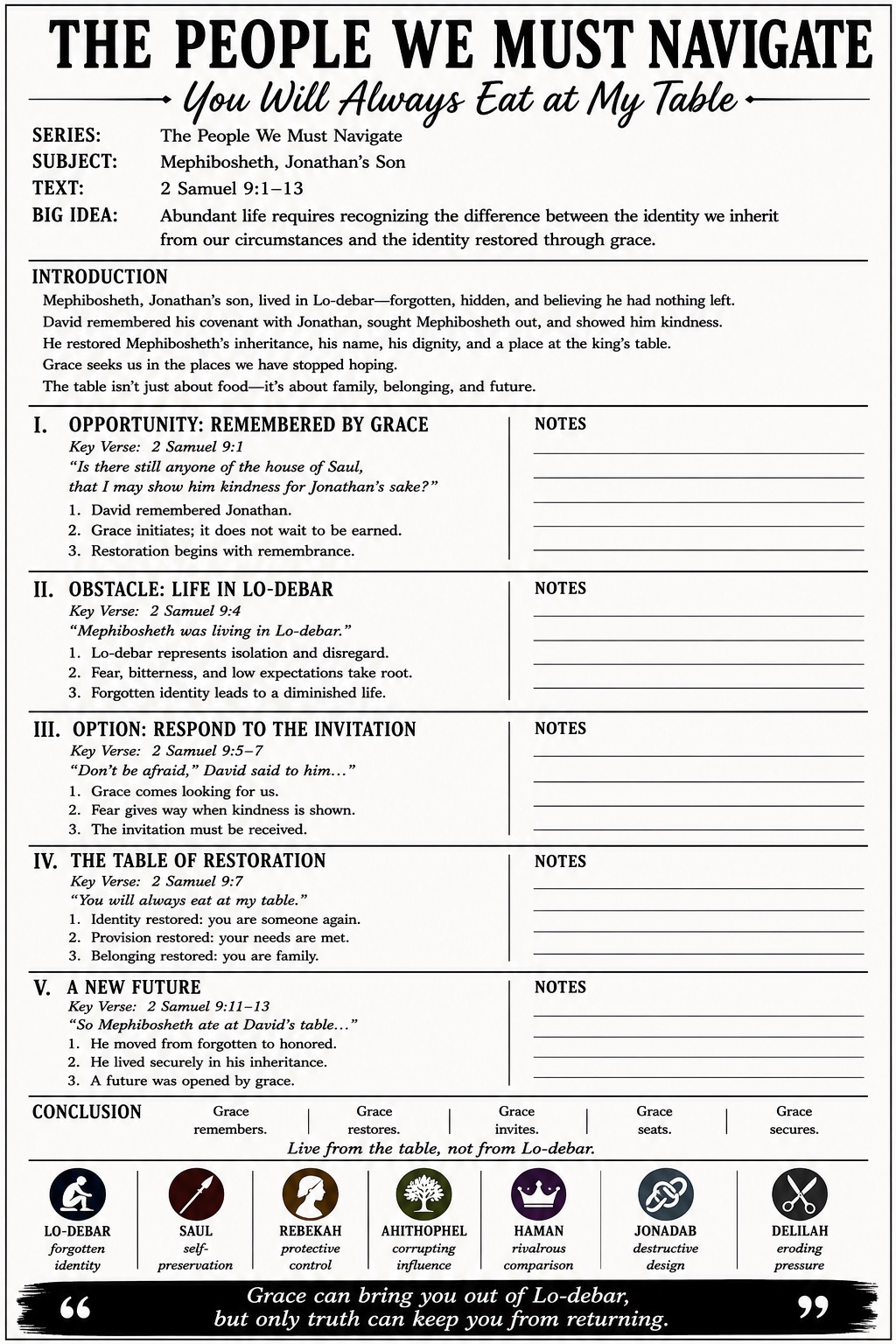
The people we need help form us. The people we must navigate test what has been formed in us. Together, these studies invite us to build life-giving relationships while developing the wisdom and spiritual maturity required for difficult ones.